
How Does Compound Microscope Work?
The compound microscope is a type of microscope that is used to magnify those objects which cannot be seen with a simple microscope. Compound microscopes… Read More »How Does Compound Microscope Work?
The compound microscope is a type of microscope that is used to magnify those objects which cannot be seen with a simple microscope. Compound microscopes… Read More »How Does Compound Microscope Work?

A chemical bond is the physical phenomenon and interaction of chemical substances held together by the attraction of atoms to each other. This association helps form molecules, compounds, ions,… Read More »Difference between Ionic, Covalent and Metallic Bonds

Did you go through the words “hard water” and “soft water?” Are you curious to know the difference between hard water and soft water? You… Read More »Difference between Hard Water and Soft Water

Quick Answer: The main difference between X-ray and MRI lies in the type of energy used and the structures they image best.X-rays use ionizing radiation… Read More »Difference Between X-Ray and MRI
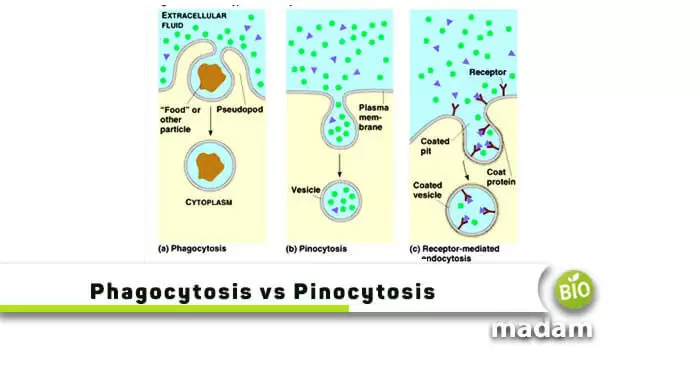
Phagocytosis and pinocytosis are the types of endocytosis, a cellular process that absorbs extracellular material. Hence, it typically helps a cell’s intracellular spaces attain beneficial… Read More »Difference between Phagocytosis and Pinocytosis

A living body constitutes numerous cells, tissues, muscles, blood, plasma, and much more inside it. Similar are the two terms, serum and plasma, acquiring a… Read More »Difference Between Serum and Plasma

Endotoxin is a type of toxic substance or pyrogen released through bacteria located inside the bacterial cell. These are also components of the cell walls… Read More »Difference between Exotoxin and Endotoxin

A dominant group of animals has bilateral body symmetry, usually called bilaterally symmetrical animals. This symmetry refers to an animal’s body shape that a plane… Read More »Difference between Protostomes and Deuterostomes

Quick Answer: Column chromatography is a chemistry based separation technique that isolates components of a mixture using a stationary phase packed inside a column and… Read More »Types of Column Chromatography: Principles, Methods & Applications

Have you ever noticed green layers on water surfaces or mold growing on old food? These are examples of algae and fungi — two very… Read More »Difference Between Algae and Fungi (Simple Explanation)

Quick Answer: Thin layer chromatography (TLC) is used to separate, identify, and analyze compounds in a mixture. Its major uses include compound detection, identification, purity… Read More »What Are the Uses of Thin Layer Chromatography?

A chemist is a scientist who studies and experiments with various processes in chemistry. In broader terms, chemists study matter, its properties, composition, the chemical… Read More »Top Famous Chemistry Scientist and their Inventions

Quick Answer: Organic compounds are widely used in daily life as food components, medicines, fuels, household products, and industrial materials. Common organic compounds such as… Read More »Uses of Organic Compounds in Daily Life

healthy brain doing exercise

The terms osmolarity and osmolality are interconnected as both relate to osmotic pressure. This pressure is significant in physics to prevent osmosis. Experts stop a… Read More »Difference Between Osmolarity And Osmolality

Quick Answer: Organic compounds are carbon-based molecules that form the foundation of life and modern civilization. They build cells, store energy, carry genetic information, power… Read More »Importance of Organic Compounds in Life and Industry

Thin-layer chromatography (TLC) is a chromatographic separation technique used to separate non-volatile compounds from a mixture. It utilizes a thin layer of a material on… Read More »Advantages and Disadvantages of Thin Layer Chromatography

Students usually make up their minds in matriculation to opt for a specific field which can be any! Some like biology so they go for… Read More »Difference Between Chemist and Chemical Engineer

Quick Answer: Thin layer chromatography (TLC) is widely used in chemistry to separate and identify non-volatile compounds. It is applied in pharmaceuticals, food testing, pesticide… Read More »Applications and Uses of Thin Layer Chromatography (TLC)

Quick Answer: Ion exchange chromatography has several disadvantages, including slow equilibration, sensitivity to pH changes, limited compatibility with organic solvents, column inconsistency, and high operational… Read More »Limitations and Disadvantages of Ion Exchange Chromatography

People are engaging in different fields of sciences these days. Some are qualified doctors, while others are experts as hospital or community pharmacists. Apart from… Read More »How Much Does Biochemist Make?

Affinity chromatography is a specialized form of liquid chromatography widely used in Chemistry for the separation and purification of biomolecules based on highly specific biological… Read More »Disadvantages of Affinity Chromatography

Quick Answer: Chemistry is essential in nursing because safe patient care depends on understanding medications, electrolyte balance, acid–base regulation, IV solutions, and laboratory values. Nurses… Read More »Why Chemistry is Important in Nursing (Clinical Applications Explained)

Quick Answer: Chemistry is essential in engineering because it explains the composition, properties, reactions, and behavior of materials used in designing, constructing, manufacturing, and powering… Read More »Importance of Chemistry in Engineering (Applications Across All Engineering Fields)

All living organisms come into being and reproduce through specific cell divisions. The eukaryotic cells, being multicellular, produce new cells following mitosis and meiosis. Are… Read More »Difference Between Mitosis and Meiosis

Every medical student has, once in a life, wished to join fields like MBBS and BDS, right? Nowadays, getting admissions in MBBS or BDS is… Read More »Why I choose Biochemistry for Higher Study?
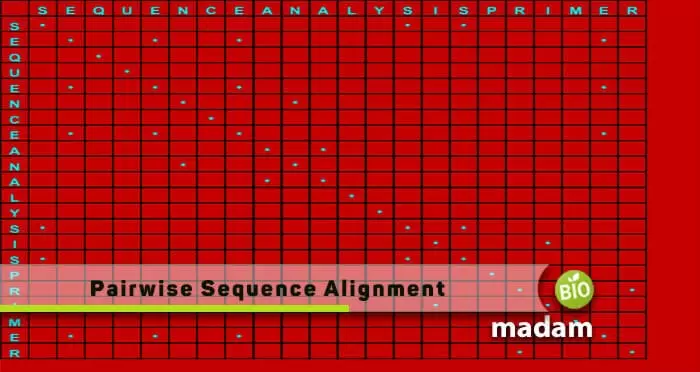
Pairwise Sequence Alignment is a common method of identification of regions of similarity. These areas usually examine the structural, functional, or evolutionary connections between the… Read More »Pairwise Sequence Alignment

Quick Answer: Chromatography is an analytical technique used to separate, identify, and analyze components of a mixture by distributing them between a stationary phase and… Read More »Principle of Chromatography

Quick Answer: Chemistry is broadly divided into five main branches: organic, inorganic, physical, analytical, and biochemistry, each focusing on different types of matter, chemical behavior,… Read More »Five Branches of Chemistry

Have you ever heard the term insulin? You must be familiar with one of the most prevalent diseases, diabetes? It is a natural hormone produced… Read More »What are Types of Insulin – Biosynthesis, Structure & Function